
“I’m lazy.” “I have no willpower.” “I lack motivation.”
Welcome my lovely 💙
When I first meet new clients, there are a few common comments shared...
“I’m lazy" or "I am often told that I'm lazy"
“I have no willpower.”
“I just lack motivation.”
After years of trying to do things the 'neurotypical way', many ADHDers start to believe these struggles are personal flaws.
But what’s really happening is often connected to how the ADHD brain regulates dopamine, a neurotransmitter involved in motivation, effort, reward, and task initiation.
One of my favourite moments in coaching is helping clients see these three beliefs in a completely different light.
Let's start with...
“I’m lazy.”
Many ADHDers believe they are lazy or have been told they are lazy. In reality, most care deeply and are often trying harder than anyone around them, their brain simply struggles to activate for certain tasks. And interestingly, when they are doing something they truly enjoy, lazy is usually the last word anyone would use to describe them.
Dopamine plays an important role in helping the brain decide:
“Is this worth starting?”
When dopamine is low or inconsistent, routine or low-interest tasks can feel incredibly hard to begin.
It’s not laziness.
It’s brain chemistry.
“I have no willpower.”
Many ADHDers feel they lack willpower. In reality, they are often showing enormous effort every day.
Dopamine helps the brain stay engaged and sustain effort over time. When dopamine levels fluctuate, the ability to push through tasks can feel very inconsistent.
And interestingly, when someone with ADHD is working on something they genuinely care about or feel excited by, their determination and persistence can be remarkable, a lack of willpower is rarely what people notice then.
Some days things flow.
Other days even small tasks feel incredibly difficult.
This isn’t a lack of discipline, it’s how the ADHD brain regulates effort.
“I lack motivation.”
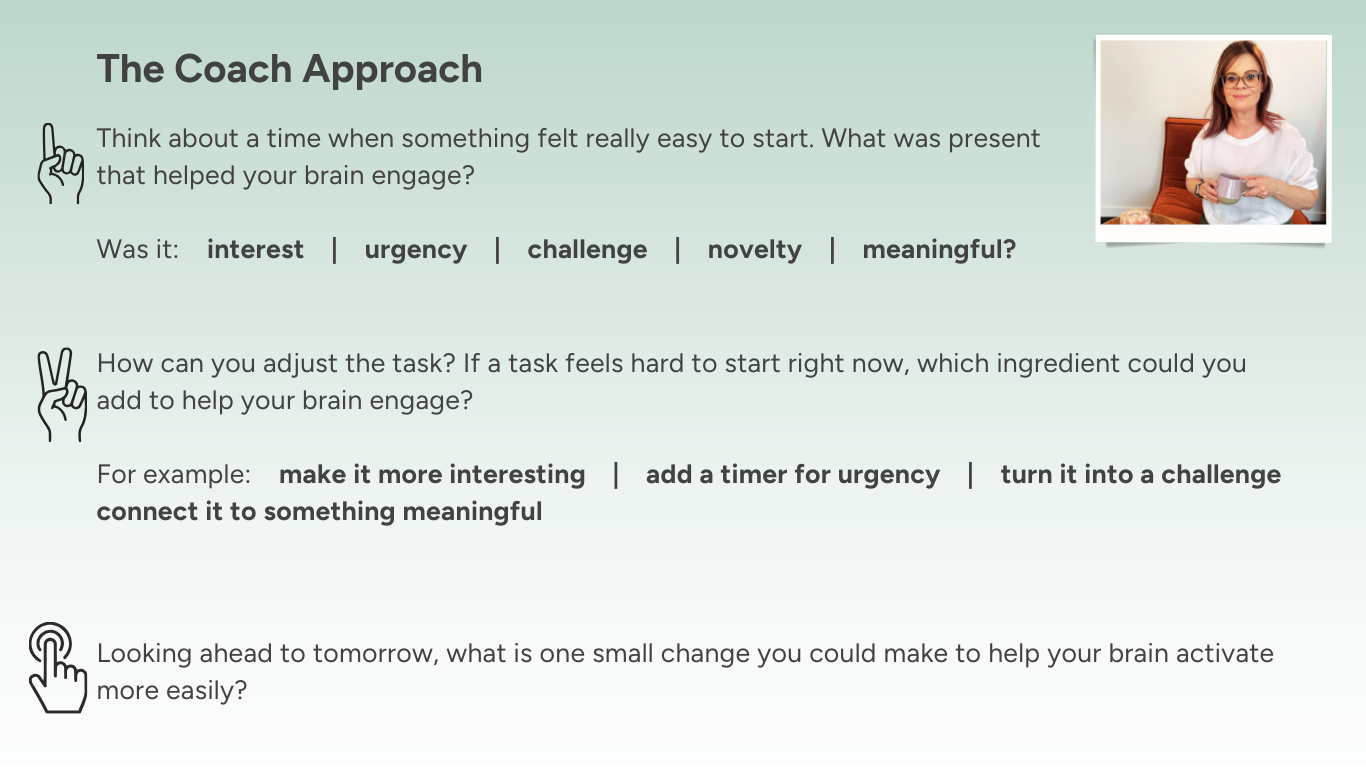
Many ADHDers believe they simply lack motivation, especially for things that don’t interest them. In reality, ADHD brains are highly motivated when something feels interesting, urgent, novel, or meaningful.
These things naturally increase dopamine.
Tasks that are repetitive, slow, or boring don’t always trigger the same dopamine response, which is why they can feel incredibly hard to start.
It’s not that ADHDers care less.
Their brain just needs the right conditions to engage.
Why This Understanding Matters
When people understand the role dopamine plays in their brain, something powerful happens.
The story shifts from:
"What’s wrong with me?"
to
"What does my brain need to work well?"
And that’s when real change begins.
What Nora Volkow’s Research Tells Us About ADHD and Dopamine
For many years, people believed ADHD was mainly about attention.
But research led by neuroscientist Dr Nora Volkow helped reveal something deeper about what is happening in the ADHD brain.
In a 2009 study, Volkow and her team used PET brain scans to look at dopamine activity in adults with ADHD and compare it with neurotypical adults.
They focused on the brain’s reward and motivation pathway, The regions which help the brain decide whether something feels interesting, rewarding, and worth starting.
What they found was fascinating.
Adults with ADHD showed lower dopamine activity in these motivation circuits.
The research suggests that the ADHD brain’s dopamine system can respond differently, particularly for tasks that feel routine or less stimulating.
For many ADHDers, this helps explain an experience they know very well.
Tasks that feel routine, repetitive, or slow to reward may simply not activate the brain’s motivation system strongly enough to get started.
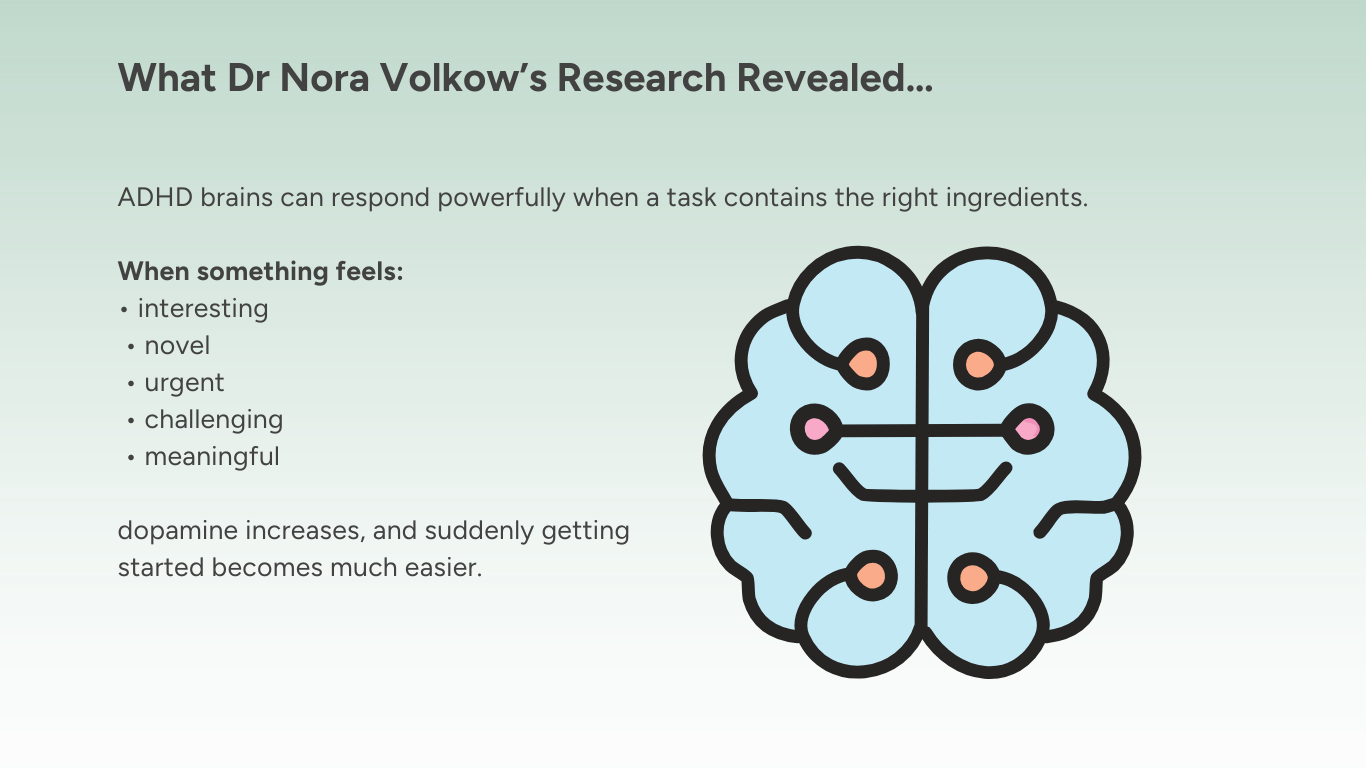
It’s not laziness.
It’s not a lack of willpower.
It’s a brain that isn’t receiving the same dopamine signal that says:
“This is worth doing. Let’s go.”
This is why many ADHDers can feel completely stuck starting one task, yet work with incredible focus and persistence on something that captures their interest.
Understanding this difference is incredibly powerful.
Because once people understand how their brain’s motivation system works, they can begin to create the right conditions for action rather than blaming themselves for struggling.
And that’s where real change begins. 💙.
Until Next Time...
Understanding your ADHD brain changes everything. When you begin working with your brain instead of against it, things that once felt impossible can start to feel achievable.
Small shifts in understanding can lead to big changes over time.
Warmly,


