
Internal Family Systems
"I'm Always Early… and I Hate It!"
Understanding What’s Really Going On
I’ve been working with a client who struggles with time in a way that might surprise you.
She’s not late.
In fact… she’s the opposite.
She arrives at least 30 minutes early to everything! Work, appointments, social events, and then sits in her car scrolling, waiting for time to pass.
And she hates it.
Before jumping into strategies, I asked her something a little different.
“Would you be open to exploring this through an IFS lens…
just to really understand what’s going on first?”
Because often, when something feels frustrating or 'irrational'…
There’s actually a really important reason behind it. She had never heard of IFS before, so I shared a simple way of understanding it with her.
Here’s the gist of what I said…
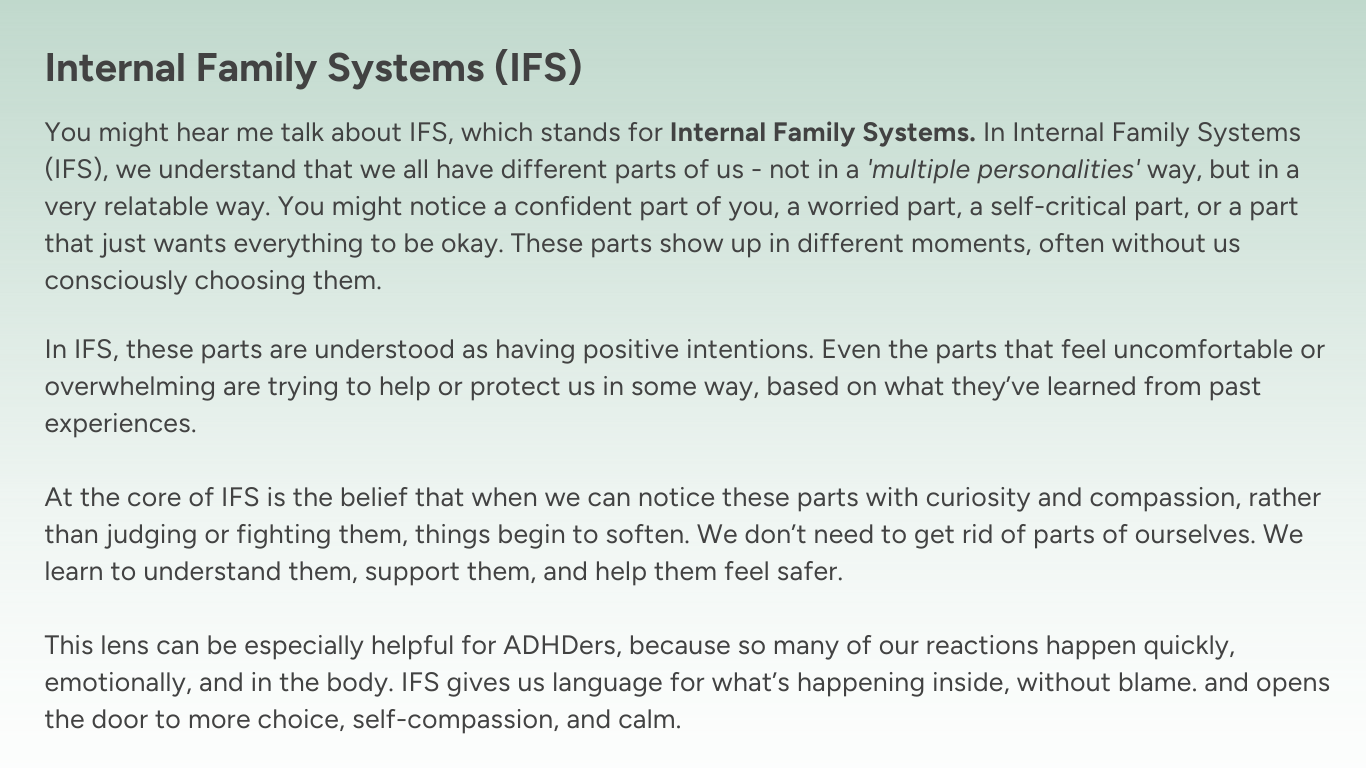
Richard Schwartz developed Internal Family Systems (IFS)
Richard Schwartz, a psychologist and the founder of Internal Family Systems (IFS), created a framework that helps us understand ourselves with more compassion and less judgement.
In IFS, we understand that we all have different parts within us. These parts are always there, but they become more noticeable when we’re feeling stressed, overwhelmed, or trying to protect ourselves.
There are three main types of parts, and one core Self.
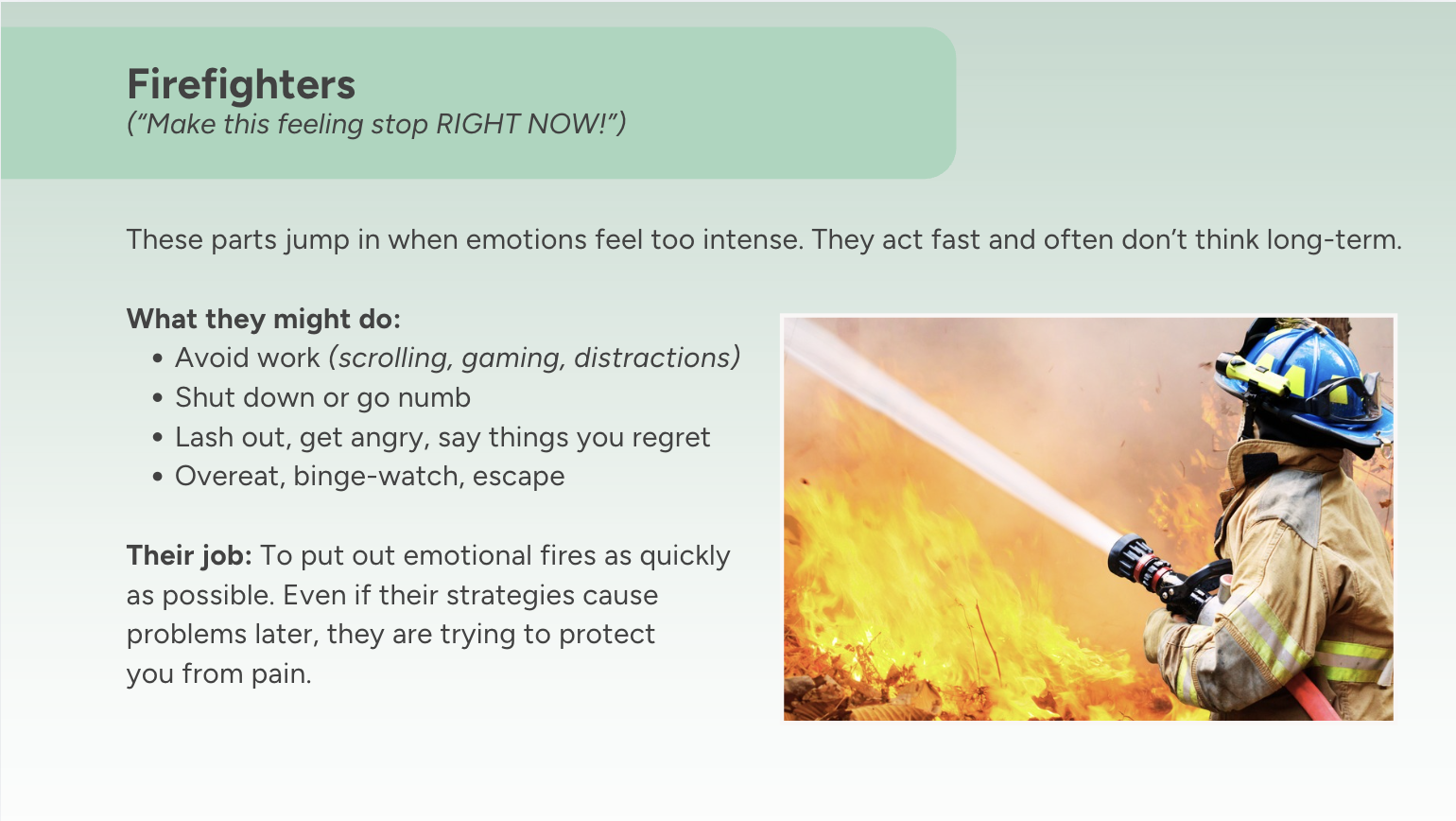
Managers: These are the parts that try to keep things together and help you avoid anything that might feel uncomfortable or risky.
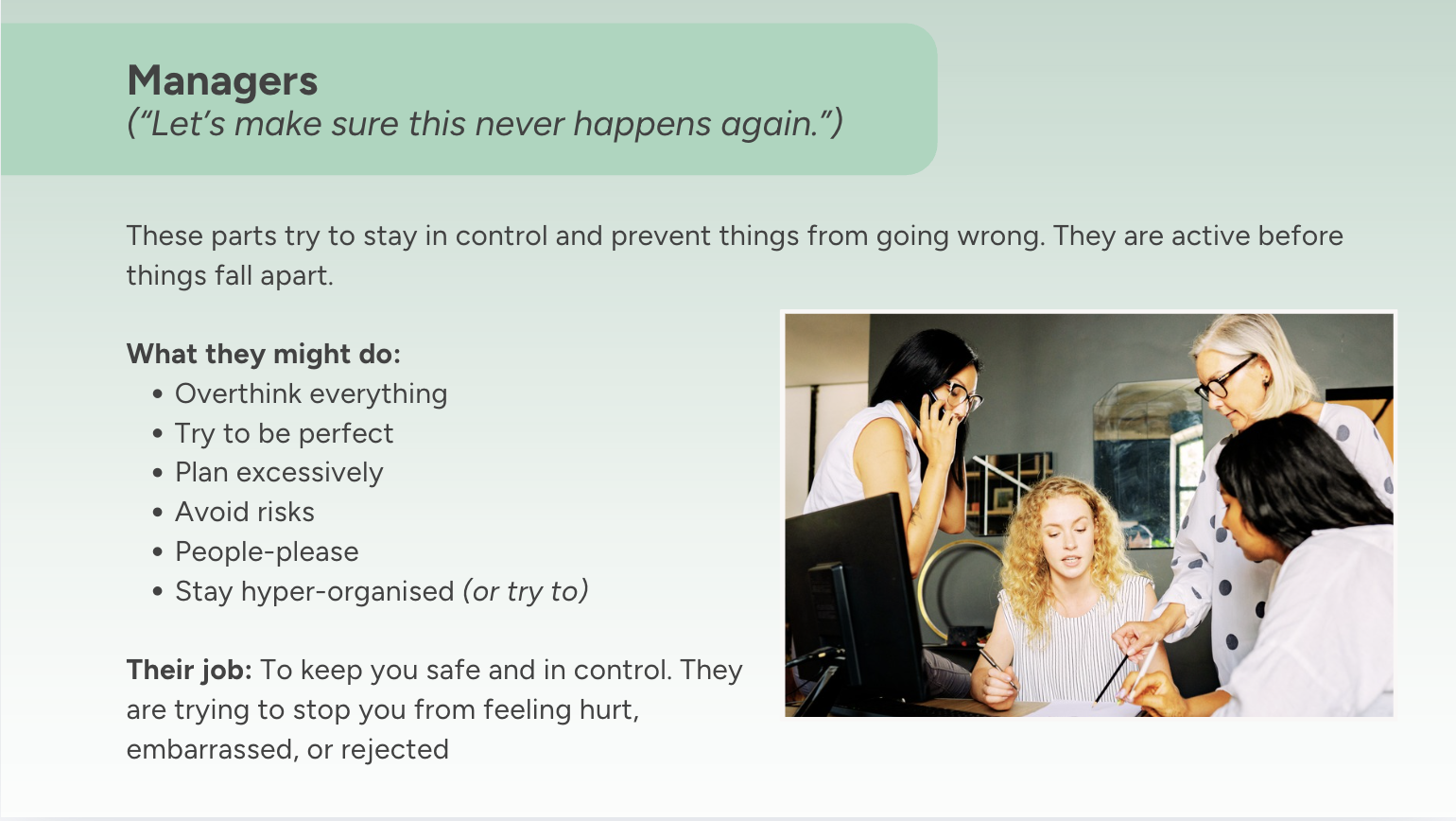
Firefighters: These parts jump in when things feel too much, trying to quickly make you feel better or take the feeling away.
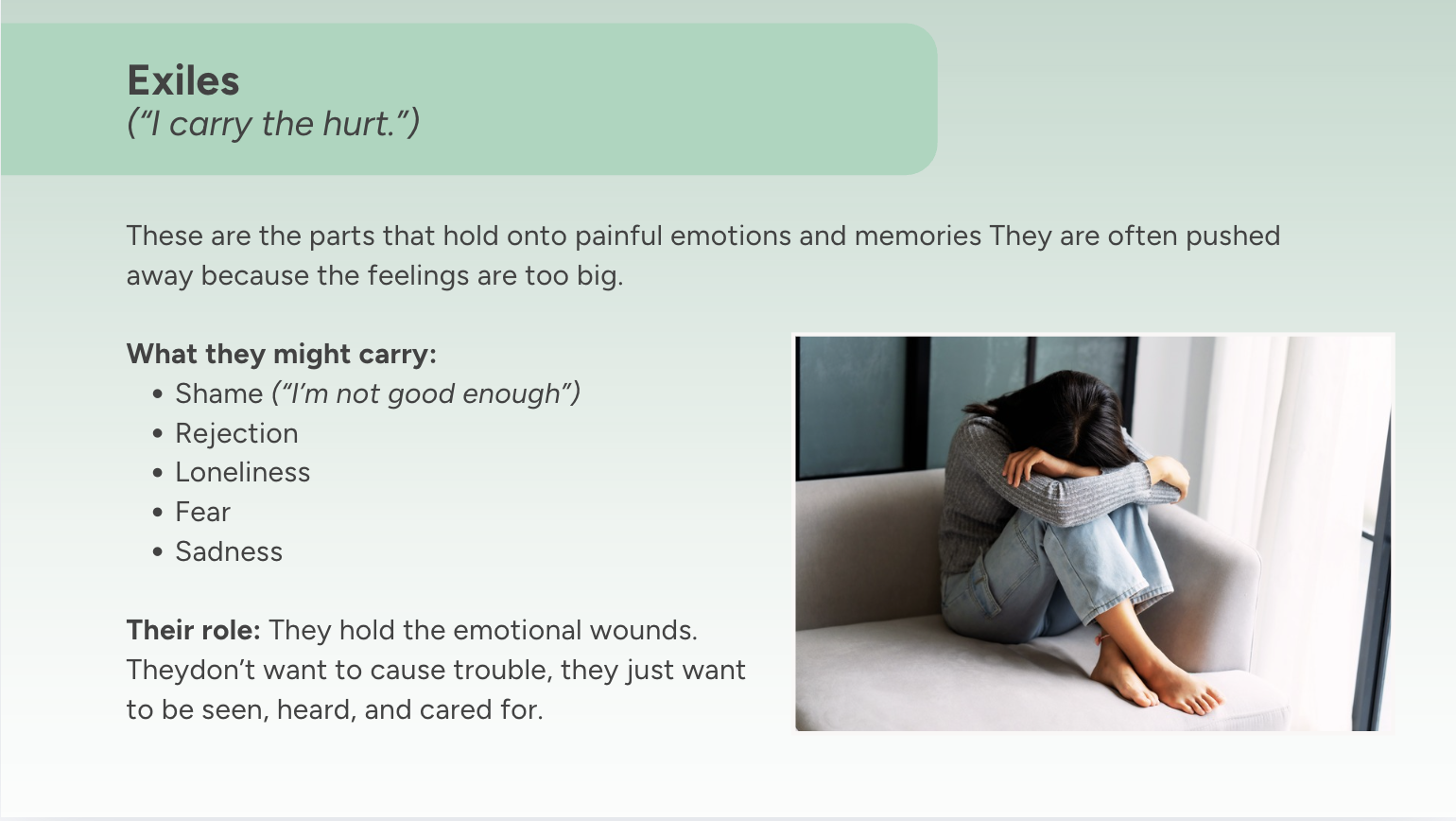
Exiles: These are the parts that hold the more tender feelings: like hurt, fear, or not feeling good enough.
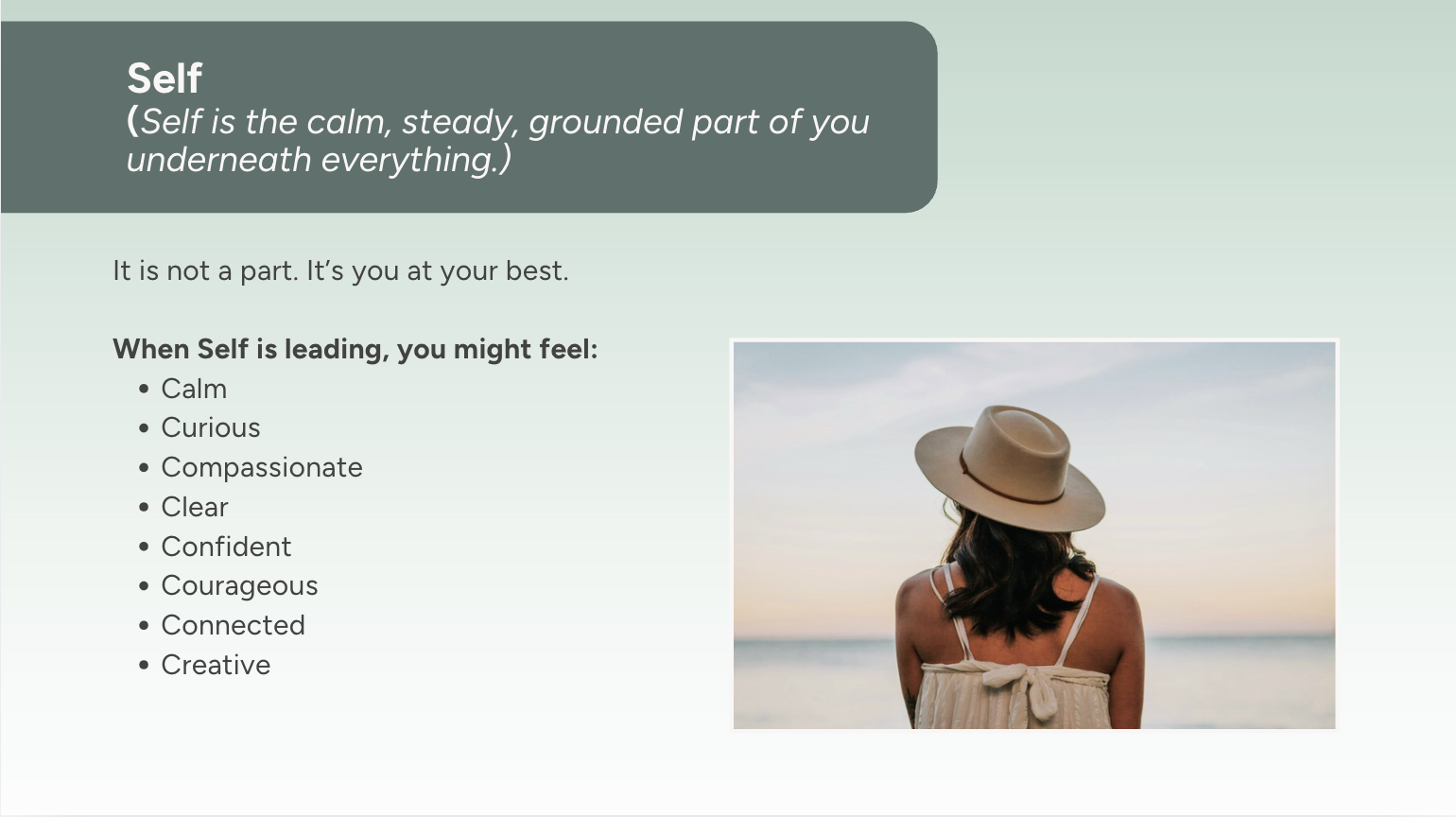
Self: At the centre of it all is your Self, the calm, grounded part of you that can notice what’s happening with curiosity and compassion.
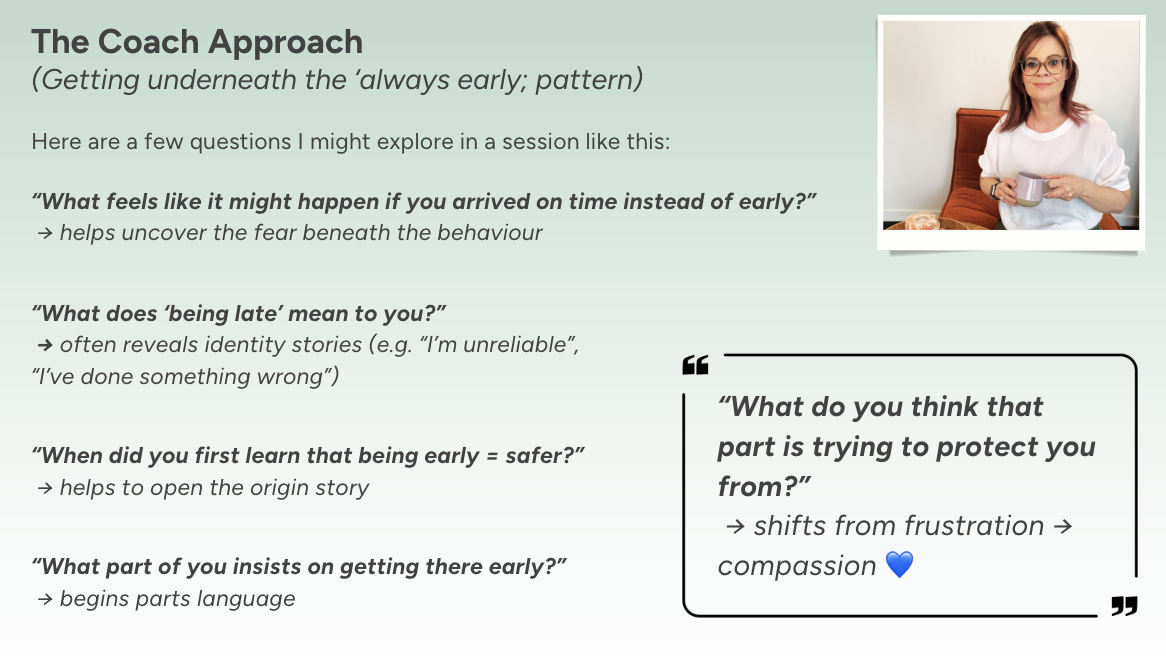
After a gentle introduction to parts, I shared with my client what we might discover through an IFS session…
When we look at this through an IFS lens, each of these parts has a role.
The 'Don’t Be Late' part is what we would call a manager.
It’s proactive. It plans ahead, stays organised, and tries to prevent anything uncomfortable from happening: like being late, being judged, or letting someone down.
The 'Waiting Part' is likely closer to an exile.
It’s the part that holds the discomfort: the uneasiness, the restlessness, and sometimes deeper feelings like fear of getting it wrong or not being good enough.
And the 'Scroller Part' is what we call a firefighter.
It steps in quickly when that uncomfortable feeling shows up, trying to soothe or distract, in this case, by scrolling and helping the time pass.
Why I Use IFS in My ADHD Coaching
One of the reasons I love using Internal Family Systems (IFS) in my ADHD coaching is because it helps us move away from fixing… and towards understanding.
So many of my clients come to me feeling frustrated with themselves.
They tell me:
“I know what to do… I just can’t do it.”
“Why do I keep doing this?”
“I feel like I’m working against myself.”
And on the surface, it can look like:
procrastination
avoidance
distraction
overthinking
When we slow things down and bring in an IFS lens, it helps us not jump straight to strategies. Because when we focus only on strategies, we can miss what’s happening underneath.
And when we take that step back… we start to see something very different.
💙 Using IFS reduces shame instantly
This is one of the most powerful shifts I see.
When a client realises:
“This isn’t me failing…
this is a part of me trying to help.”
There’s often a sense of relief.
Less judgement.
Less pressure.
More space to respond differently.
Once we understand the why underneath a behaviour…
The strategies I share land very differently.
They’re no longer:
forced
resisted
or short-lived
They become:
supportive
aligned
and much more sustainable
It allows us to work with the brain, not against it
This is what I care about most in my coaching. Not pushing harder. Not trying to 'fix' people. But helping them understand:
how their brain works
what their parts are trying to do
and what they actually need
When we combine:
executive function support
an understanding of dopamine
and an IFS approach
We’re not just managing ADHD. We’re changing the relationship someone has with themselves.
I'd love to leave you with this. 👇
You are not working against yourself. 💙 There are just parts of you trying to help, and once we understand them, everything becomes a little easier.
Warmly,


